
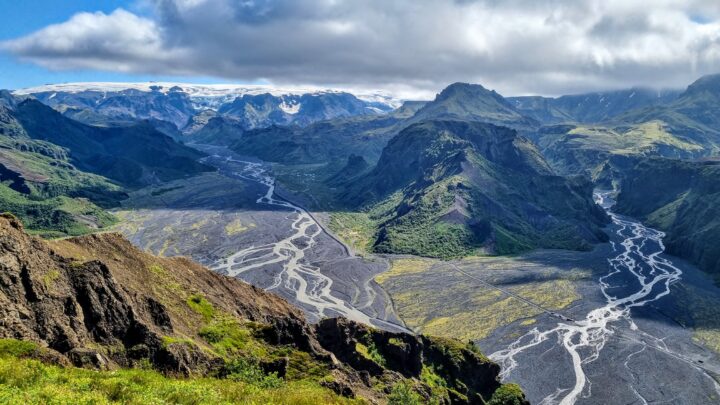
The Laugavegur Trail is widely regarded as Iceland’s most iconic trekking route. The trail runs from the geothermal landscape of Landmannalaugar through the highlands to the lush valley of Þórsmörk, passing steaming hot springs, volcanic mountains, black sand plains, and glacier views along the way.
For many hikers planning this journey, one question comes up quickly: Should you hike the Laugavegur Trail guided or self-guided?
Both options follow the same spectacular landscapes and mountain huts, but the way you experience the trek is very different. Below, we explain the differences between a guided Laugavegur trek and a self-guided Laugavegur trek, what makes the guided trek so special, and who each option is best suited for.
The Laugavegur Trail: A Brief Overview
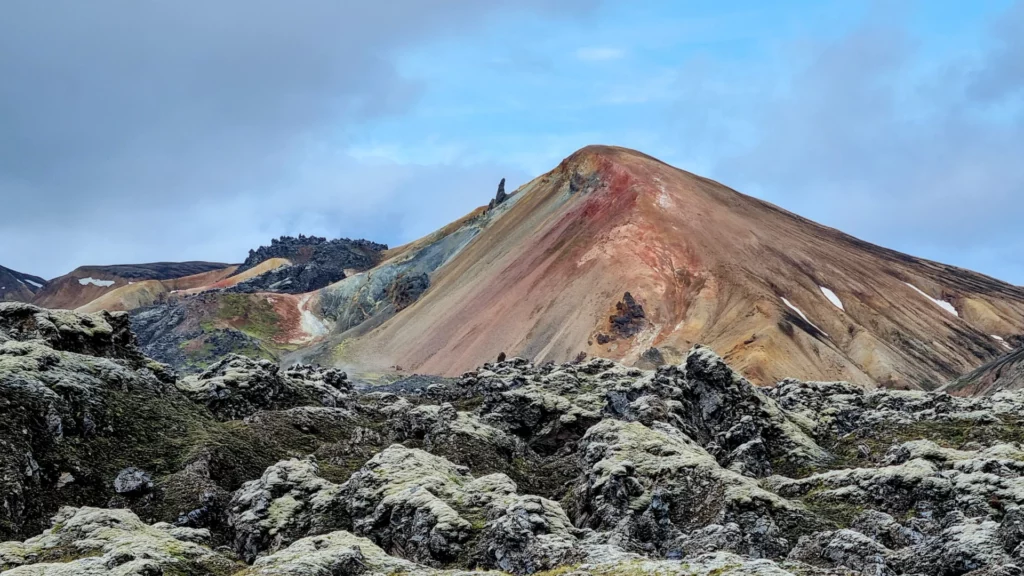
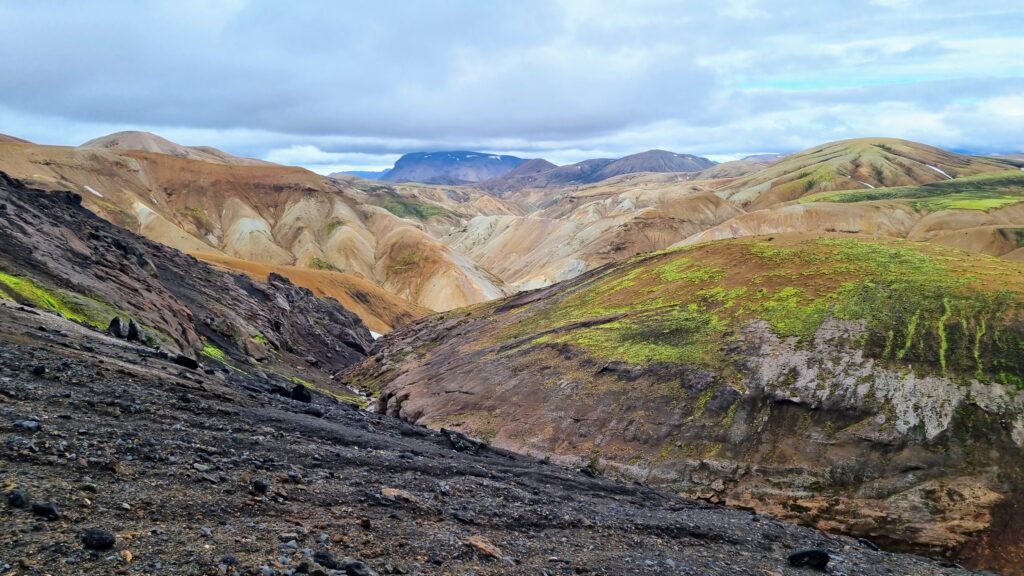
The Laugavegur Trail begins in Landmannalaugar, a geothermal hotspot in Iceland’s southern highlands, and travels through the colourful mountains of the Torfajökull massif, one of the world’s most active geothermal areas.
During the trek, hikers pass steaming hot springs, volcanic terrain, and sweeping views of Mýrdalsjökull, Iceland’s fourth-largest glacier dome. The route eventually reaches the green valley of Þórsmörk, named after the Norse god Thor.
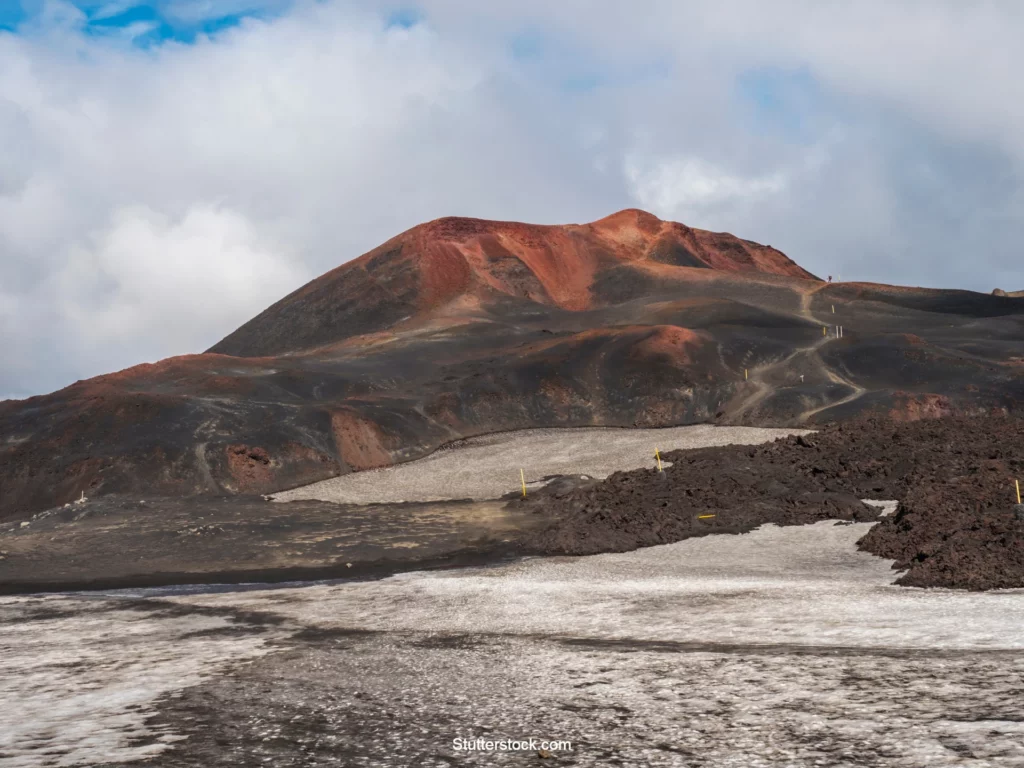
The full trek continues over the dramatic Fimmvörðuháls mountain pass, past the volcanic craters and lava from the 2010 eruption in Eyjafjallajökull, before descending alongside waterfalls to the famous Skógafoss waterfall. We’d argue, the Laugavegur trek is not complete without this part.
Because the trail crosses remote highland terrain, many hikers choose to book the trek either guided or self-guided, with logistics, luggage transport and hut reservations arranged in advance.
Guided Laugavegur Trek: Hiking With a Guide and Group
A guided Laugavegur Trail trek is more than just having someone lead the way. It’s a fundamentally richer way to experience the trail. You hike as part of a small group with an expert guide from start to finish, and a 4×4 support vehicle transports your food, sleeping bag, and main luggage between huts, meaning you only need to carry a daypack with food and extra clothing for the day.
What makes the guided experience so special is what happens along the way. The guide leads the group along the trail, manages navigation and timing, and helps ensure the journey runs smoothly from hut to hut — and at the end of each day, they cook and provide all meals for the group, so you can rest and recover for the next day. But more than that, they bring the landscape to life. The steaming vents, the sculpted lava fields, the glaciers creeping down volcanic slopes: all of it comes into focus when you understand what you’re actually looking at. You leave with a depth of knowledge about Iceland’s landscapes that you simply can’t get from a trail map.
Then there’s the group itself. There’s something genuinely special about sharing a trek like this, pushing through a tough mountain crossing together, swapping stories over dinner in a hut, watching the same sunset from the same ridge. The friendships that form on a guided trek often become one of the most memorable parts of the whole journey. (we keep our group sizes small with max. 14 people per group).
The guided trek also goes further, continuing all the way across the dramatic Fimmvörðuháls pass and finishes at the iconic Skógafoss waterfall. Along this section, hikers pass the Magni and Móði craters, created during the 2010 eruption, before descending beside the Skógá river and its series of waterfalls. It’s the complete Laugavegur route, with a finish that feels genuinely earned.
Who Is a Guided Laugavegur Trek For?
A guided trek can be a great choice for:
- Hikers visiting Iceland’s highlands for the first time
- People who want to learn more about the landscape while they walk
- Solo travellers who enjoy a group experience
- Anyone who prefers having navigation and logistics handled by a guide (can be especially good with Iceland’s unpredictable weathers)
- For those who want delicious home cooked meals prepared by the guide.
Many hikers also enjoy the social side of a guided trip, sharing the daily journey and evenings in the huts with fellow trekkers.
Guided vs Self-Guided Laugavegur: The Key Difference
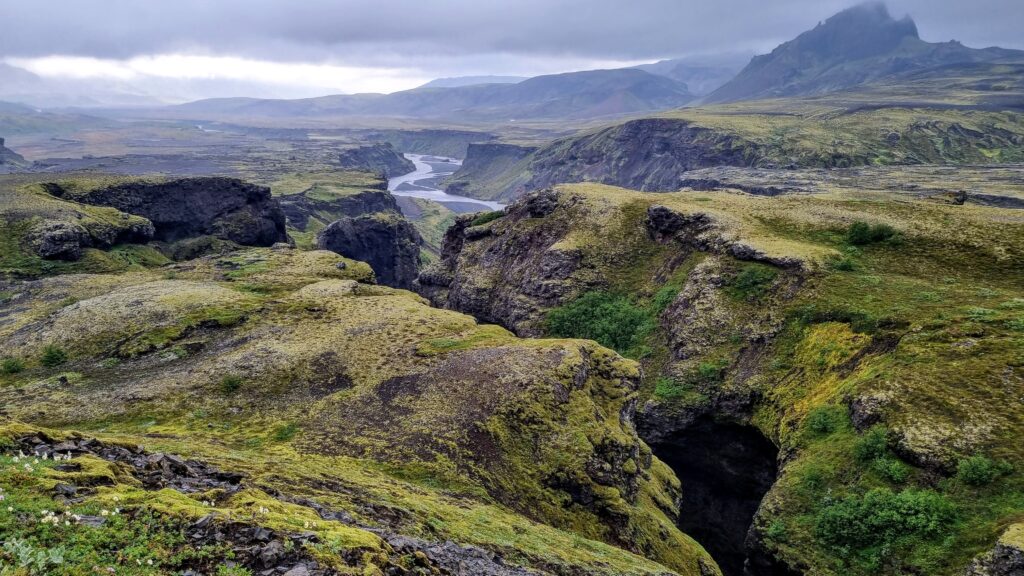
Both options take you through the same dramatic highland landscapes, with overnight stays in mountain huts and daily hikes of roughly 5–8 hours. The terrain is the same, but the experience is not.
On a guided trek, the landscape becomes a story you understand rather than scenery you pass through. Your guide adds layers – geological, historical, human – that transform what you’re seeing into something that stays with you long after the trek is over. The group dynamic adds warmth and energy to every day on the trail. And the route goes all the way across Fimmvörðuháls to Skógafoss, giving you the most complete version of the journey.
A self-guided trek suits hikers who want full independence and to set their own pace, finishing in Þórsmörk with time to explore the valley freely. Logistics are arranged, but the trail is yours alone to interpret.
If you want to understand Iceland as you walk through it, and share that with others, the guided trek is the more rewarding choice.
Two Ways to Experience Iceland’s Most Famous Trek
The Laugavegur Trail remains one of the most remarkable trekking routes in Iceland. Whether you hike it with a guide or independently, the journey takes you through geothermal landscapes, volcanic terrain, glacier views, and one of the country’s most beautiful valleys.
Choosing between guided or self-guided simply depends on the kind of experience you want.
Some hikers enjoy learning about the landscape while walking with a guide and group. Others prefer moving at their own rhythm and exploring the trail more independently.
Either way, the Laugavegur Trail offers a memorable adventure through Iceland’s highlands.