A practical guide from Arctic Hiking & Expeditions
Iceland has a way of making you slow down. The landscapes are unlike anywhere else. Waterfalls, lava fields, glaciers, and horizons that seem to stretch beyond what’s possible. When people search for “Trekking & Hiking in Iceland”, that’s exactly what they find. And yet, even the most breathtaking views are only the beginning of what the experience gives you.
Trekking in Iceland is about moving through landscapes that feel alive, geothermal steam rising from the ground, rivers that must be crossed on foot, and weather that keeps you humble.
Below, we’ll walk you through what it’s really like to hike in Iceland – and how our tours fit into that experience.
What Makes Trekking in Iceland Different?
1. The Landscape Changes Constantly
The landscapes of Iceland are immensely diverse, which is one of the things that make Iceland such a special destination to visit. You rarely walk the same terrain for long. Within a single day you might cross:
- Black lava fields
- Snow patches (even in summer)
- Moss-covered hills
- Glacial rivers
- Birch forests
- Colorful rhyolite mountains
- Waterfalls
- Deep canyons and gullies.
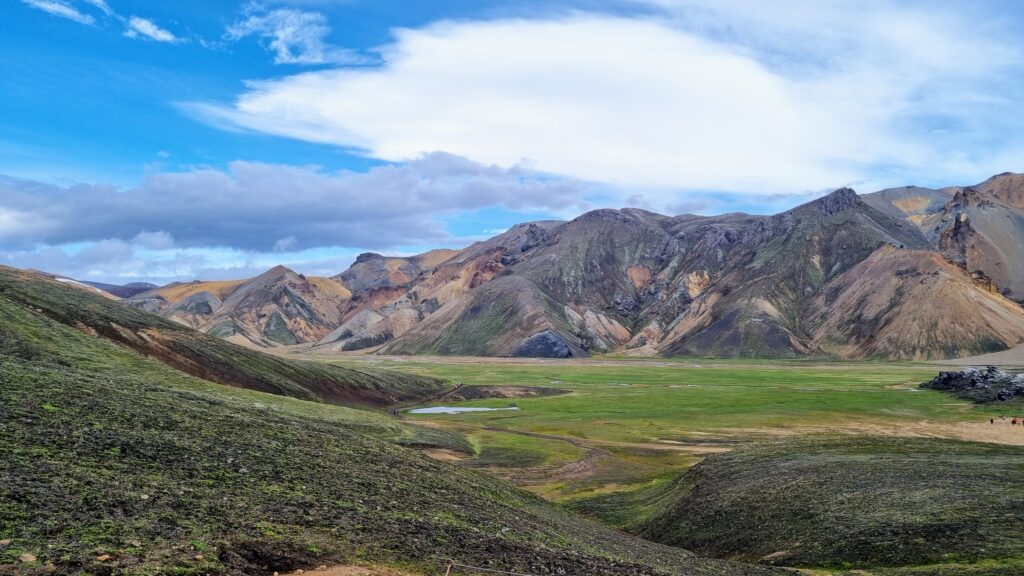
On the Laugavegur Trail, for example, you move from colorful rhyolite mountains in Landmannalaugar to green valleys in Þórsmörk – and if you continue all the way over Fimmvörðuháls, you finish at the waterfall Skógafoss.
This variety is one of the main reasons people come trekking in Iceland. You’re not just walking distance but it feels as if you are walking through geological history.
2. You’re Often Far From Roads
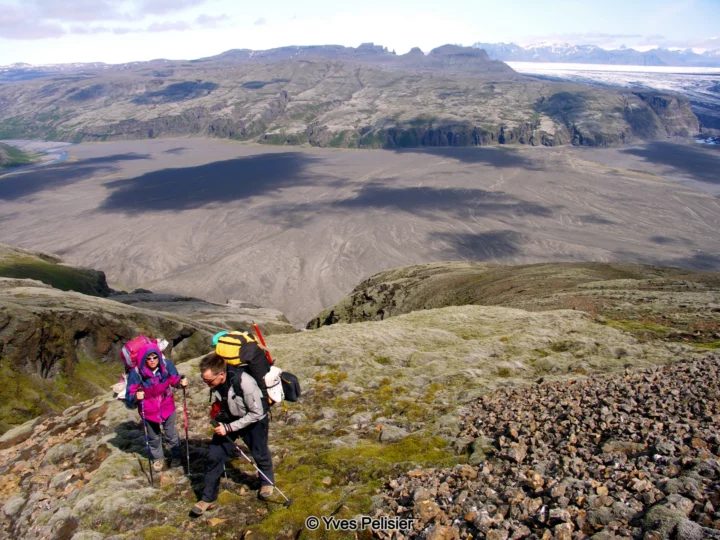
Many of Iceland’s best multi-day hikes are in the highlands. These areas are only accessible in summer and often require river crossings, mountain buses, or 4×4 vehicles.
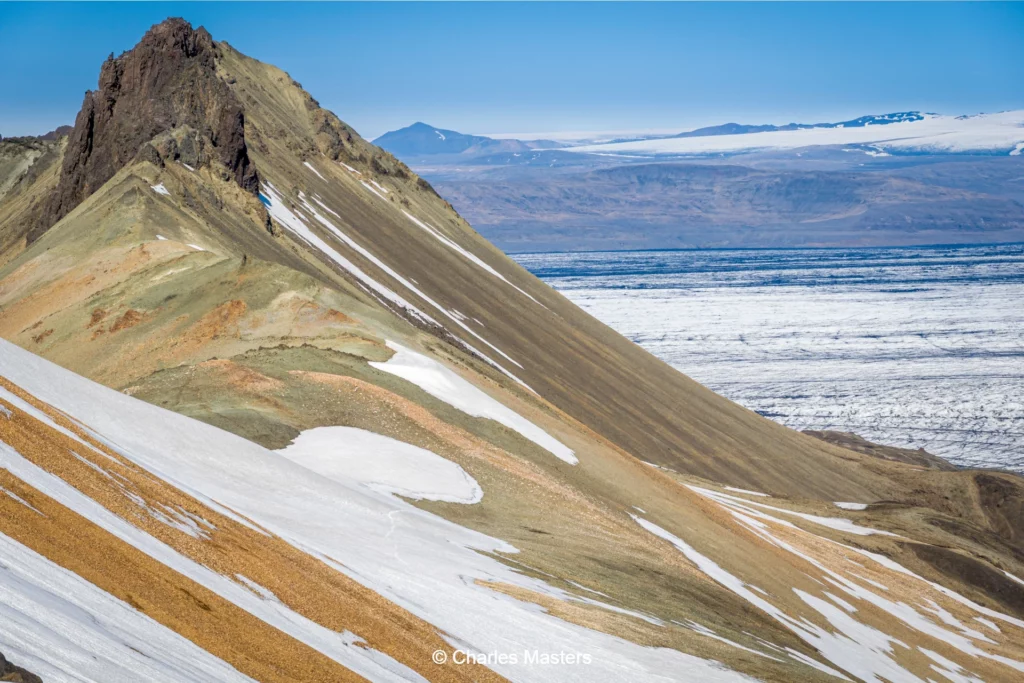
South of Vatnajökull, Iceland’s largest glacier, you’ll find some of the country’s most remote trekking routes. This is where our Old Charcoal Trail and The Icelandic Classic: Núpsstaðarskógar to Skaftafell backpacking tours take place.
Here, you walk:
- Along glacial rivers
- Through lava fields
- Across gravel ridges
- Into hidden birch forests
- And in some cases, directly onto the glacier itself
These routes are quieter than the Laugavegur area. Some days, you may not meet anyone outside your group.
If you’re looking for immersion rather than convenience, this is where Iceland trekking becomes something deeper.
3. Weather Is Part of the Experience
Let’s be honest: Icelandic weather is unpredictable.
Even in July, you should expect wind, rain, bright sun and sudden temperature changes, sometimes all in one day.
Good trekking in Iceland isn’t about hoping for perfect weather. It’s about being prepared and embracing the conditions. With the right layers and mindset, even a misty day adds atmosphere to the walk.
This is also why many hikers choose guided tours. A local guide doesn’t just lead the route, they assess river crossings, adjust plans when needed, and help you move safely through changing conditions.
When Is the Best Time for Trekking & Hiking in Iceland?
The highland trekking season runs from late June to early September.
Why summer?
- Highland roads are open
- River levels are manageable
- Mountain huts are accessible
- Daylight hours are long
- The terrain is not snow covered and the temperatures are comfortable
Shoulder season (late May or September) can work, but flexibility is important.
Outside of summer, most multi-day highland treks are not accessible without specialized winter skills and equipment.
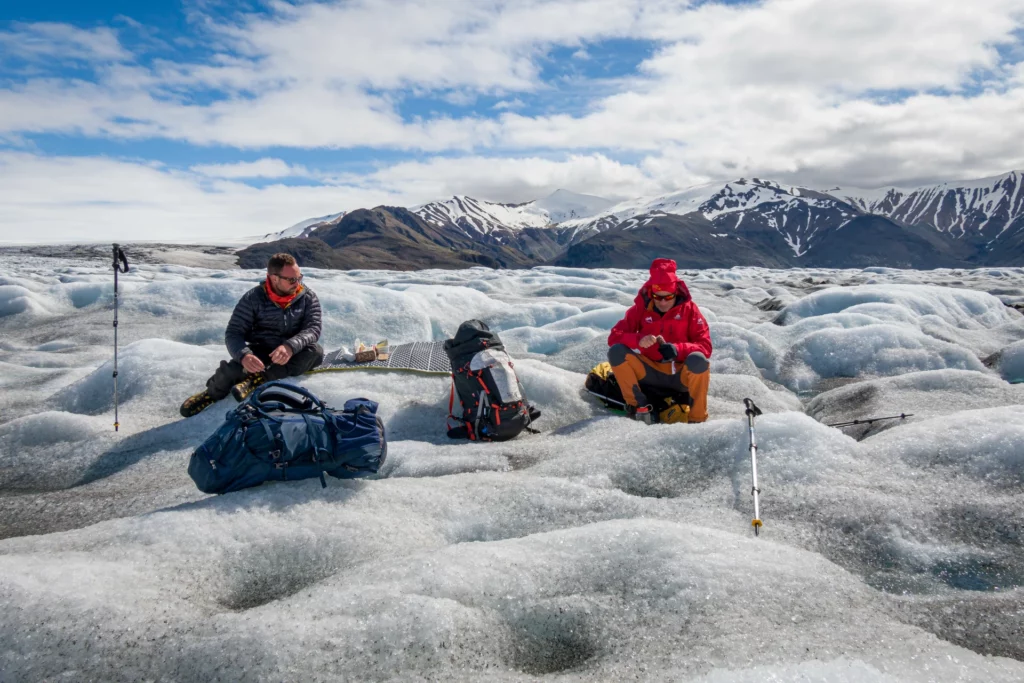
Who Can Go Trekking in Iceland?
There isn’t one type of Iceland trekker.
- The Laugavegur Trail suits fit hikers who can walk 5–7 hours per day.
- The Combined Trails and the Icelandic Classic, with glacier crossings require a bit more endurance and confidence on uneven terrain.
You don’t need to be an athlete. But you do need:
- Good hiking boots
- Layered clothing
- A realistic understanding of daily distances
- Respect for the terrain
- To be reasonably fit
Choose a route that matches your fitness and wanted tour type.
What You’ll Remember Most
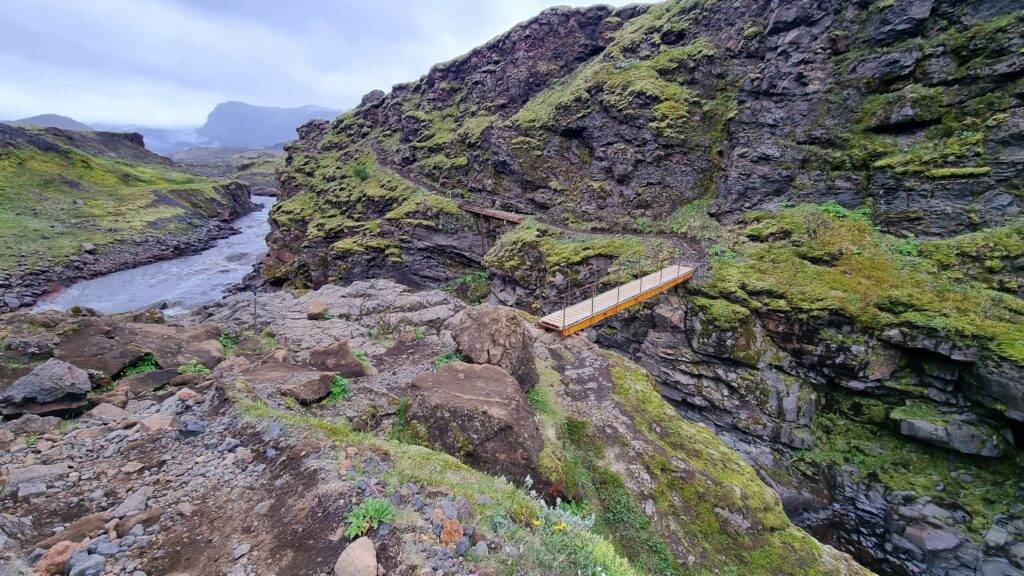
When people think about trekking and hiking in Iceland, they often imagine the big landmarks, waterfalls, glaciers and mountain passes. And yes, those moments are powerful. But they’re not always what stays with you the most.
More often, it’s the quieter experiences that linger. The silence of the highlands. The first careful steps onto glacier ice. The cold rush of a river crossing, followed by the comfort of warming up afterward. Watching clouds shift across a wide valley. Sitting in a hut or tent at the end of a long day, tired in a satisfying way, the best way.
Trekking in Iceland isn’t only about reaching a summit or a famous waterfall. It’s about moving steadily through landscapes that still feel wild, and letting the smaller moments become the ones you carry home.
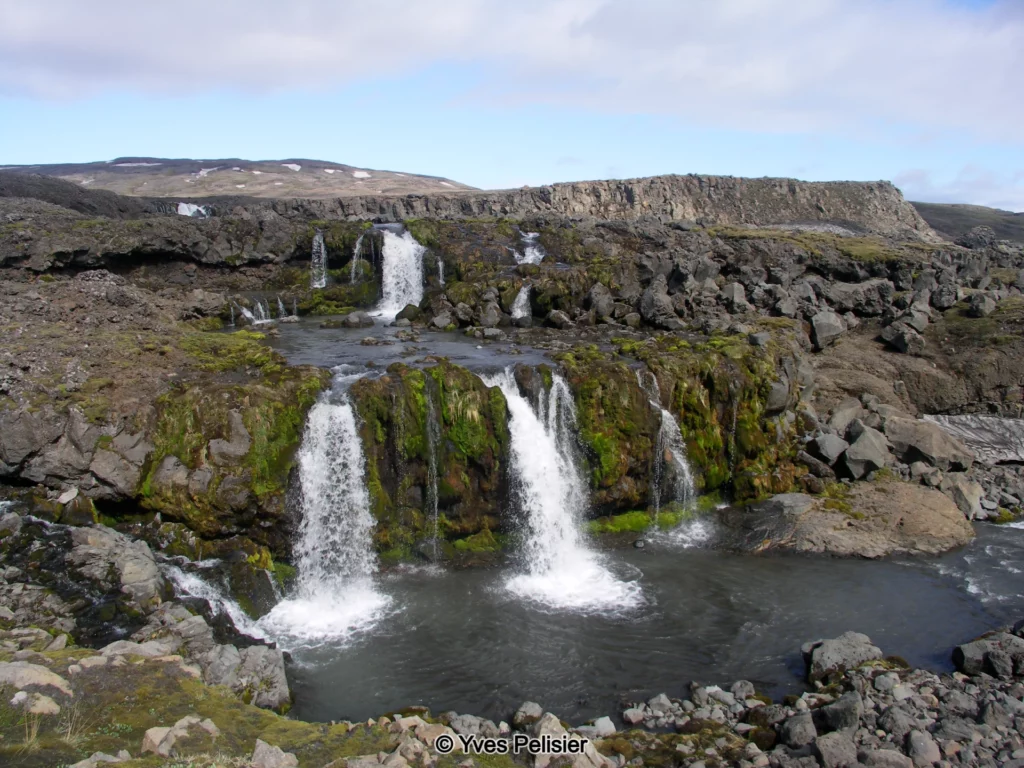
Planning Your Trekking Adventure in Iceland
If you’re considering trekking in Iceland, ask yourself:
- Do I want iconic and popular routes? → Consider the Laugavegur Trail.
- Do I want remote highlands and few other hikers? → Look at the Old Charcoal Trail & The Icelandic Classic
- Do I want a longer, and more demanding trek? → Explore The Combined Trails.
- Do I prefer independence with logistical support? → The Self-Guided Laugavegur may be right for you.
At Arctic Hiking & Expeditions, we focus on routes we know deeply. Many of them were developed or refined by us, through decades of local experience in the Icelandic highlands.
If you’re ready to experience Trekking & Hiking in Iceland in a way that goes beyond the surface, we’d be happy to help you choose the right trail.